Scrolling through social media, it’s everywhere—mothers criticizing other mothers, snarky comments, the never-ending “mommy wars.” And it got me wondering… how did we get here? When did motherhood turn into a competition instead of a community? So, I looked it up. And the answer? It’s not an accident.
The Village That Was
For most of history, motherhood wasn’t a solo act. It was communal. Women didn’t just raise their own children—they raised each other’s children. Grandmothers, aunts, sisters, and neighbors stepped in. They shared the load, they shared the knowledge, and yes, sometimes they even breastfed each other’s babies.
No one expected a mother to carry the entire weight of raising children alone—because that would be… well, insane.
Then, everything changed.
The Shift—From Community to Competition
What happened? Industrialization. Men left for factory jobs. Then they went to war. During that time, women stepped up. They worked in factories, kept the economy running, and for the first time, many of them got a taste of life outside the home.
But after the wars, men came back. They needed their jobs. And suddenly, a massive cultural shift was engineered to convince women that their true place—their happiest place—was at home.
Enter: the “Trad Wife” ideal. The perfect housewife. The woman who kept a spotless home, raised polite children, and greeted her husband with a warm meal and a smile. This wasn’t just a societal trend—it was an active propaganda campaign. And if she struggled? It wasn’t because she was isolated. It wasn’t because she was suddenly raising children in a single-family home with no real help.
Nope. If she struggled, she was the problem.
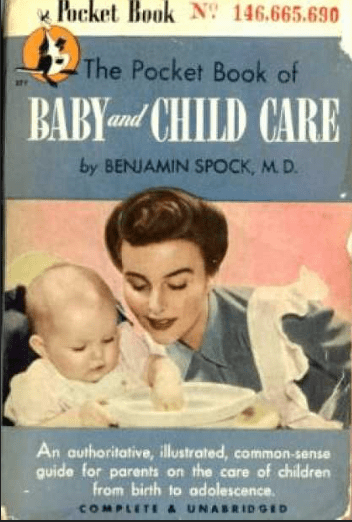
Then, the experts got involved. Not the village grandmothers. Not the seasoned mothers passing down wisdom from experience. No, now it was men—psychologists, doctors, and policymakers—who claimed to know best. And their influence reshaped motherhood forever.
The Rise of “Scientific Motherhood”
By the early 1900s, parenting was no longer about instincts or communal wisdom—it became something you had to learn from experts. Suddenly, mothers weren’t considered naturally capable of raising their own children. They needed instruction. They needed guidelines. They needed to follow the science.
And who provided this “science”? Men like Dr. Luther Emmett Holt, Sigmund Freud, and Dr. Benjamin Spock.
Dr. Holt and the Rigid Mothering Model
Dr. Holt was one of the first to push the idea that strict routines and rules—not a mother’s intuition—were essential for raising a “healthy” baby. He told mothers:
- Do not pick up your baby too much—it will make them weak and dependent.
- Stick to rigid feeding schedules—breastfeeding on demand was primitive and undisciplined.
- Limit affection—too much cuddling would create “needy” children.
Freud’s Blame Game
Then, Freud entered the scene and gave mothers something even worse—guilt. His theories blamed mothers for nearly every psychological issue a child might develop. He pushed the idea of the “schizophrenogenic mother,” claiming that emotionally cold, distant mothers were responsible for their children’s schizophrenia.
The most devastating accusation? “Refrigerator mothers.”
Freud’s followers claimed that autism and other developmental disorders were caused by emotionally detached mothers. This dangerous, unfounded theory destroyed countless families, making mothers believe they had damaged their own children. It wasn’t until decades later that science proved these ideas were completely false.
Dr. Spock: The Parenting Bible That Controlled a Generation
Then came Dr. Benjamin Spock. His 1946 book The Common Sense Book of Baby and Child Care became the parenting bible for post-war mothers. But while Spock encouraged a gentler approach than Holt or Freud, he still positioned doctors and psychologists as the ultimate authority on parenting.
His book told mothers:
- Trust your instincts—but only within certain limits. If they clashed with “expert” advice, the expert was probably right.
- Follow structured parenting methods—because science had proven what worked best.
- If your child was struggling, it was your responsibility to fix it.
Even though Spock softened the tone of scientific motherhood, the damage was already done. The idea that mothers needed rules, routines, and professional oversight to raise their children had become deeply ingrained.
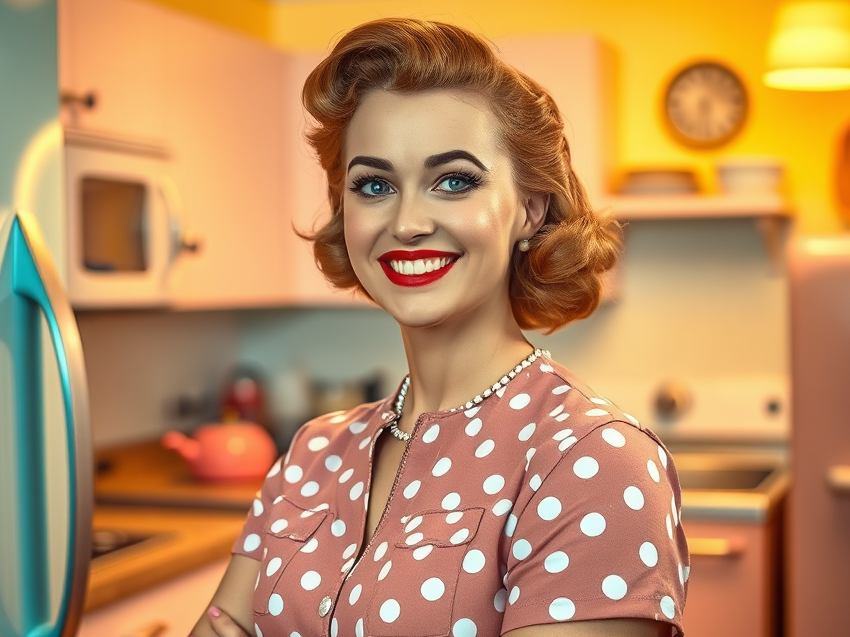
The Creation of the “Perfect Mother”
Now, imagine being a mother in the 1950s.
- You’re living in the suburbs, isolated from extended family and community support.
- You’re expected to be home all day, tending to children and housework alone.
- You’ve been told that everything you do—or don’t do—can permanently damage your child.
Every mistake, every struggle, every moment of exhaustion feels like proof that you’re failing.
And here’s the kicker—there is no way to win.
Because the experts kept changing the rules.
- In one decade, breastfeeding is essential. The next, it’s primitive.
- One expert says strict sleep schedules are crucial. Another says they cause trauma.
- One doctor claims your child needs discipline. Another insists you should never say “no.”
Mothers were constantly being told:
- You’re too soft.
- You’re too strict.
- You’re too involved.
- You’re too distant.
And worst of all? If you weren’t handling it effortlessly, the problem was you.
The Competition Begins
So, where did all this frustration and self-doubt go? It got turned inward—toward other mothers.
Women, trapped in their homes with limited social support, began measuring their success by comparing themselves to others.
- The mother who looked more put-together? She must be doing it right.
- The one whose child misbehaved? She must be failing.
- The mother who struggled but admitted it? She’s just not trying hard enough.
Instead of questioning the impossible standards, mothers turned against each other. Judgment, side-eyes, whispered gossip—it became a survival mechanism in a world that refused to acknowledge how broken the system really was.
And just like that, the Mommy Wars were born.
Why We’re Still Fighting
Fast forward to today, and the competition hasn’t just survived—it’s evolved.
Now, we don’t just compare ourselves to the mom next door. We compare ourselves to Pinterest boards, mommy influencers, and perfect ‘Day in the Life’ reels.
The result?
- Mothers are more isolated than ever.
- Postpartum depression and anxiety are skyrocketing.
- Instead of rebuilding our village, we attack each other online.
Because somewhere along the way, we forgot the truth…
The Truth They Don’t Want You to See
This competition? This judgment? This feeling that you’re never good enough?
It’s not natural.
It’s a generational trauma response.
Our mothers were set up to fail. Their mothers were set up to fail. And now? We’re carrying the exhaustion, the resentment, and the impossible expectations they never had the space to process.
But we don’t have to.
We can unlearn this. We can heal. We can reclaim what was stolen from us.
And most importantly? We can stop fighting each other and start fighting the system that convinced us we were ever supposed to do this alone.
Ready to start healing?
Let’s talk about it.
If this resonated with you, share it. Send it to another mom who needs to hear this. Follow me on Instagram and Pinterest for more deep dives into the real history behind modern motherhood. Because when we know the truth, we can finally start changing the story.






 The Rooted Mama
Leave a comment